With time change this past Sunday, and two nursing home services (2-2:35 & 3-3:35) I managed to get a short nap between 4 & 5.
Jeff
The Napping Habits of 8 Famous Men
A few weeks ago, we covered the myriad of amazing benefits provided by the too-oft maligned nap. If you’re still not convinced of the benefits of napping and are in need of some additional inspiration, or, you’re simply curious about how some of history’s famous men incorporated the nap into their daily routines, today we provide a look at the napping habits of 8 eminent men.
Winston Churchill
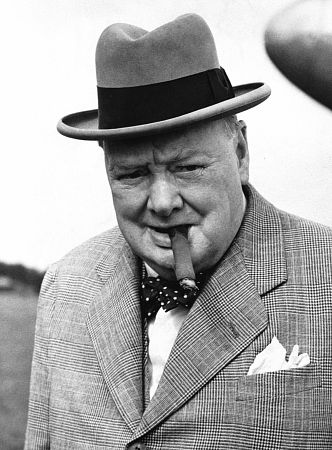 “Nature has not intended mankind to work from eight in the morning until midnight without that refreshment of blessed oblivion which, even if it only lasts twenty minutes, is sufficient to renew all the vital forces.”
Churchill’s afternoon nap was a non-negotiable part of his relaxed approach to his daily routine. Churchill would start his day at 8 am by eating breakfast, answering letters, and dictating to his secretaries, all of which was conducted while still in bed. This bout of work was followed by a bath, a long lunch, and plenty of sipping on watered-down whisky. After lunch it was time to paint or play cards with his wife, Clementine. Then it was nap time. Churchill would take off his clothes and climb into bed for up to two hours of solid napping. At 6:30 he would rise, take another bath, and enjoy a long dinner. He finally got down to business at 11 pm and would work for several hours before going to bed and repeating the cycle over again. An unapologetic night owl, Churchill felt that his naps helped him get twice as much done each day (which makes one wonder just how little he would have worked without it!)
Nap were so sacrosanct to Churchill that he kept a bed in the Houses of Parliament and believed that napping was the key to his success in leading the country through the Battle of Britain.
Lyndon B. Johnson
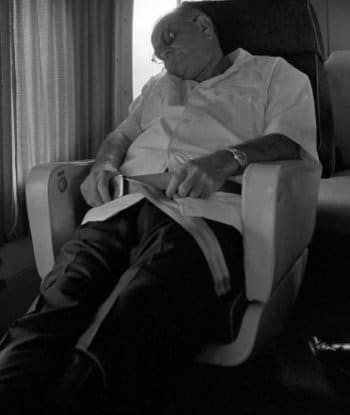
LBJ catches some winks aboard Air Force One.
When Lyndon B. Johnson assumed the presidency, he set out to pass an extremely ambitious legislative agenda, including a war on poverty, the protection of civil rights, the commencement of public works, and the cutting of taxes. To accomplish his goals, LBJ was prepared to work like a dog and to this end he adopted a “two-shift day.” He woke up at 6:30 or 7, read the newspapers, and then headed to the White House where he worked until 2 pm. He would then exercise, taking a swim or brisk walk, before donning his pajamas and settling in for a 30 minute nap. He awoke up at 4, changed into clean clothes and began his “second shift” of the day, sometimes working until 1 or 2 in the morning.
Napoleon Bonaparte
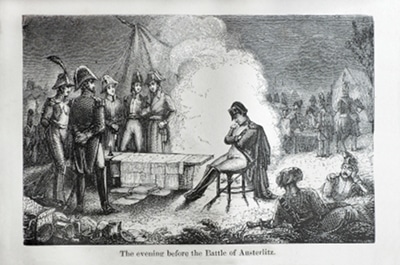 During campaigns, Napoleon was a whirlwind of energy, galloping from place to place, poring over maps, and pondering strategy. He would go days without changing clothes or lying down for a full night’s sleep. But he had the ability, as many great leaders do it seems, of being able fall asleep at the drop of a hat. This ability was likely a product of his supreme confidence. Napoleon could sleep like a baby right before battle and even when cannons were booming nearby. As they have been proven to do by modern science, Napoleon’s naps staved off the fatigue which stalks those who skip a whole night’s sleep. Then, when the storm of battle was over, the general would sleep for an eighteen hour stretch.
John F. Kennedy
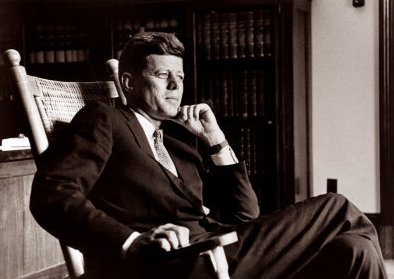 After a mid-morning stint of swimming and exercise, John F. Kennedy would eat his lunch in bed and then settle down for a nap. He would have his valet draw the drapes and ask not to be disturbed unless it was a true emergency. He would then quickly fall asleep for a 1-2 hour nap. Jackie would always join him no matter what she was doing when her husband’s nap commenced, leaving an assistant to entertain her guests. Head of the household staff, JB West, recalled that “during those hours the Kennedy doors were closed. No telephone calls were allowed, no folders sent up, no interruptions from the staff. Nobody went upstairs, for any reason.”
After awakening from his nap, Kennedy would take his second hot bath of the day, resume meetings in the Oval Office at 3:30 pm, knock off around 7:30 or 8:00, take another swim, and change his clothes for dinner. Kennedy wore at least three different sets of clothing every single day he was President.
Jackie was the one who later encouraged LBJ to take naps, telling him, “It changed Jack’s whole life.”
Thomas Edison
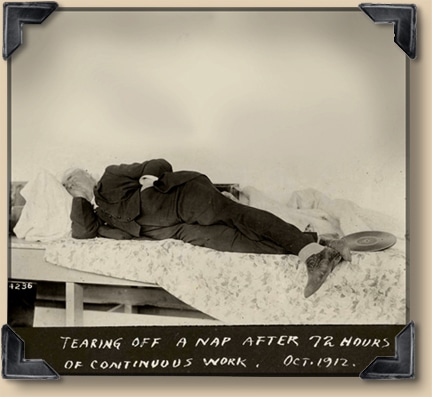
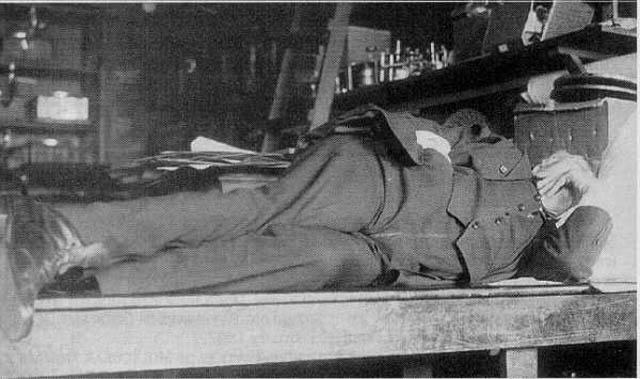 Thomas Edison was something of a self-hating napper. He liked to boast about how hard he worked, how he slept only three or four hours a night, and how he would sometimes work for 72 hours straight. But in truth the key to his spectacular productivity was something he was loathe to mention and hid from others: daily napping. Once when his friend Henry Ford paid a visit to his lab, Edison’s assistant stopped him from going into the inventor’s office because Edison was snoozing. Ford said, “But I thought Edison didn’t sleep very much.” To which the assistant answered, “He doesn’t sleep very much at all, he just naps a lot.”
Edison said he could sleep “as sound as a bug in a barrel of morphine” and he often got in a couple of 3 hour naps during the day. One of his associates said that Edison’s “genius for sleep equaled his genius for invention. He could go to sleep anywhere, anytime, on anything.” Indeed, he would often curl up for his naps on a workbench or in a closet.
Stonewall Jackson
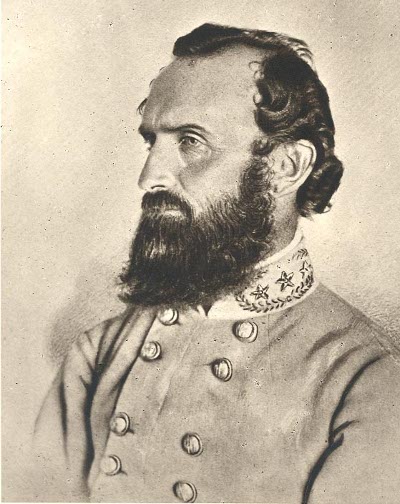 Jackson, a general cut from the same cloth as Napoleon, could nap in any place—by fences, under trees, on porches–even in the stress of war. He liked longer naps but also had the reputation for taking quick, 5 minute siestas to rest his eyes. A couple of anecdotes of the General’s napping habits from A Thesaurus of Anecdotes of and Incidents in the Life of Lieut-General Thomas Jonathan Jackson by Elihu Rile:
“During the fury of the struggle at Malvern Hill, Jackson was roused with great difficulty from a heavy slumber, and informed of the situation. Those around him were apprehensive of the result, for attack after attack on our part had been repulsed with severe loss. Jackson, upon recovering his consciousness, merely said, ‘McClellan is only fighting to get away. In the morning, he will be gone.’ He immediately resumed his nap, and Dr. Dabney adds that, upon hearing his opinion, he at once followed his example. When the morning light dawned upon this scene of blood, every trace of the enemy had disappeared.” –Dr. B. L. Dabney
“Talking about Jackson’s propensity to sleep, I remember after the battles of the Seven Days’ Fight around Richmond one Sunday we went to Dr. Hoge’s church. He went to sleep soon after the service began and slept through the greater part of it. A man who can go to sleep under Dr. Hoge’s preaching, can go to sleep anywhere on the face of this earth. When the service was over the people climbed over the backs of the pews to get near him, and the aisles became crowded and General Jackson embarrassed. Presently he turned to me and said: ‘Doctor, didn’t you say the horses were ready?’ and I said, ‘Yes, sir,’ and we bolted out of church.
Many a night I have kept him on his horse by holding to his coattail. He always promised to do as much for me when he had finished his nap. He meant to do it, I am sure, but my turn never came.” — Dr. Hunter McGuire
Ronald Reagan
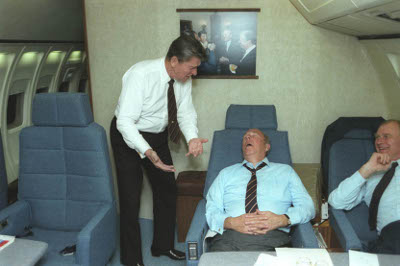
Reagan, preaching to the converted.
Ronald Reagan was a controversial napper. Critics tried to use his rumored propensity for napping as proof of a lackadaisical approach to the presidency and a reminder of his advanced age. Nancy always denied that her husband was a napper. But his diaries show that he at least occasionally indulged in the nap, noting in reference to his daily schedule that “afternoon is still nap time” and often taking one to recharge before donning a tux and attending a formal nighttime event. He also enjoyed turkey hunts for the opportunity they provided for naps. For his part, Reagan, as he did with many things, had a sense of humor about the criticism over his napping. When he was leaving office, he joked that his cabinet chair should be inscribed with, “Ronald Reagan Slept Here.”
Salvador Dali
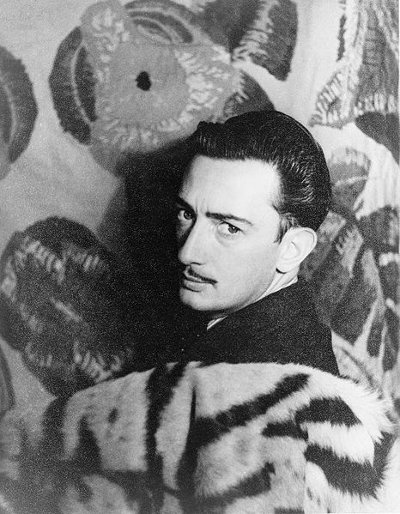 Eccentric artist Salvador Dali believed that one of the secrets to becoming a great painter was what he called “slumber with a key.” “Slumber with a key” was an afternoon siesta designed to last no longer than a second. To accomplish this micro nap, Dali recommended sitting in a chair with a heavy metal key pressed between the thumb and forefinger of the left hand. A plate would be placed upside down on the floor underneath the hand with the key. The moment Dali fell asleep, the key would slip from his finger, clang the plate, and awaken him. Dali believed this tiny nap “revivified” an artist’s whole “physical and physic being.”
Dali said that he had learned the “slumber with a key” trick from the Capuchin monks and that other artists he knew also used it. Albert Einstein “napped” this way as well, as have other inventors and thinkers who believed this nap inspired their ideas and creativity. These men were unknowingly taking advantage of what scientists today call the “hypnogogic” nap, when the mind, before it reaches Stage 2 sleep, unlocks free flowing creative thoughts. It’s a topic interesting enough to warrant its own post!


 Posts
Posts


